

How to avoid last-minute empty tables at a restaurant
A last-minute cancellation doesn't have to mean an empty table — it only means that if no one knows in time to rebook it.
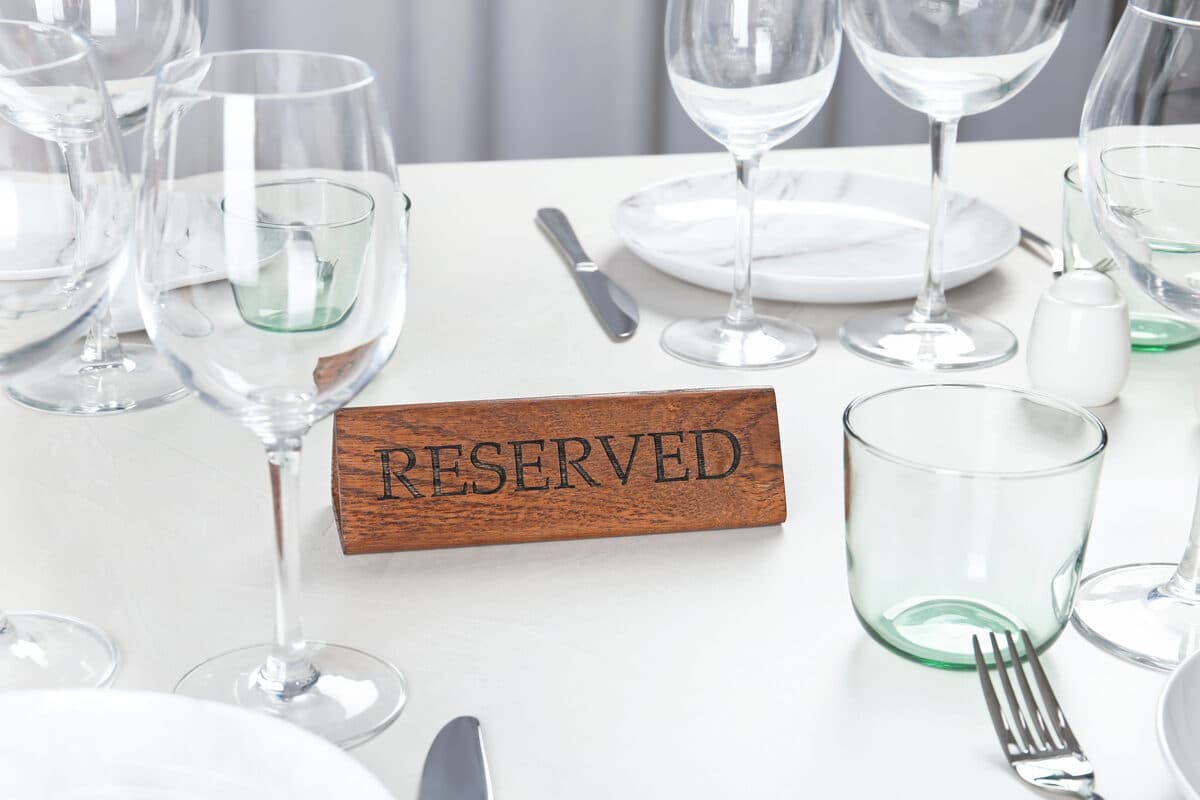
A cancellation close to the reservation time is, for many restaurants, a guaranteed loss: there is no longer time to find another customer for that table through standard channels, and that night's revenue is effectively reduced compared to what the schedule initially promised.
Where information gets lost
When a customer cancels by phone, the information reaches whoever answers the call at that moment — but it doesn't always reach those managing table distribution during service quickly, especially during a busy shift. The gap between knowing the table is free and managing to reassign it is where the opportunity is lost.
This guide shows how to set up a flow that closes this gap using the unified inbox and automation builder of WhatSMS.
Step 1 — Make the cancellation visible in real-time
When a cancellation happens through a WhatsApp conversation, that information becomes immediately visible in the booking panel's inbox, without relying on anyone to verbally relay the message to the team during service.
Step 2 — Create a waiting list flow
In the visual automation editor, drag a trigger node activated by a reservation cancellation, followed by a condition node that checks if there is anyone on the waiting list for that time slot. If there is, the flow automatically sends a message to that person, giving them the opportunity to take the table that has just become available.
Step 3 — Set up a last-minute campaign as a safety net
For tables that become free with no one on the waiting list, configure a segmented bulk campaign — directed only to nearby or regular customers who have already given consent to receive this type of message — to fire automatically through the same condition node when the waiting list is empty.
Step 4 — Review the result on the booking panel
Each slot filled through this flow is recorded in the same conversation and visible on the panel, which allows the team to quickly confirm if the table has been reassigned before the start of service, without needing to manually verify each cancellation.
What this means in practical terms
A cancellation at 7:30 PM for an 8:30 PM reservation leaves only a one-hour window to react. In this type of situation, the speed at which information reaches the booking panel and is forwarded — automatically, without relying on someone to transmit the message verbally — is what decides if the table gets filled or remains empty.
Combining a waiting list with last-minute campaigns, instead of relying on a single strategy, increases the probability of filling the vacancy — each mechanism covers a slightly different scenario.
Over time, this type of quick reaction stops being an exception and becomes part of the restaurant's normal operation, without requiring extra effort from the team for every cancellation.
A cancellation is no longer automatically a loss — it becomes an opportunity for reassignment, provided the information reaches those who can act on it in time. You can test this flow for free and see how it works with your restaurant's actual reservations.
Frequently asked questions
How does the team know immediately that a table has become available?
When a cancellation occurs via a WhatsApp conversation, the information is immediately visible in the unified inbox of the booking panel — it does not rely on anyone relaying the message verbally during service.
Is it necessary to set up a separate waiting list for each time slot?
The waiting list is associated with the relevant time slot through an automation flow with a cancellation trigger; the same flow can be applied to multiple time slots, adjusting only the criteria.
Are last-minute messages to fill a table sent to all customers?
No — these are segmented campaigns, directed only to nearby or regular customers who have already given consent to receive such messages, not to the entire contact database.
Does this flow also work for reservations made by phone, not just WhatsApp?
Automatic registration in the inbox depends on the cancellation arriving via a digital channel (WhatsApp, SMS, email); a phone cancellation must be recorded manually by the team to enter the same flow.